
Remote work has transformed how U.S. companies hire talent. Businesses are no longer limited to employees who live within commuting distance of their physical offices, and access to international talent has made it possible to build highly capable teams at significantly lower operating costs.
But as companies expand their remote workforce, a new question emerges:
Should your offshore employees work independently from home, or should you build a dedicated offshore office where your team works together under professional management?
Both models offer access to global talent, but they provide very different levels of accountability, infrastructure, security, collaboration, management, and scalability.
For companies planning to build a long-term offshore workforce, a managed offshore office can provide many of the cost advantages of remote hiring while recreating the structure and visibility of an in-house operation.
What Is a Dedicated Offshore Office?
A dedicated offshore office is an extension of your company’s operations located in another country.
Unlike traditional outsourcing, where work is handed over to a third-party company, an offshore office allows you to maintain control over your team and its responsibilities.
Your offshore employees can work exclusively for your organization, follow your workflows and SOPs, use your systems, report to your managers, and become integrated into your existing operation.
The difference is that the infrastructure surrounding those employees is managed locally.
For example, Prequel Systems helps U.S. companies build and manage dedicated offshore offices in Pakistan. We provide the physical workspace and support businesses with recruitment, HR, payroll administration, IT infrastructure, attendance management, and on-site operational oversight.
You manage the work. We manage everything on the ground.
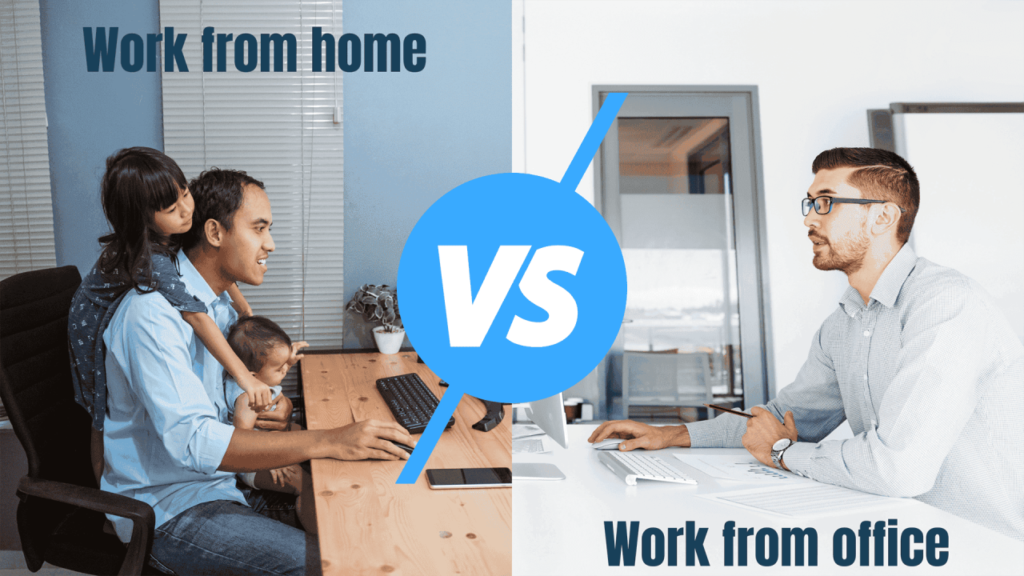
Offshore Office vs. Work-From-Home Employees
Hiring employees who work remotely from home can be an excellent solution when a company needs one or two people. However, managing a growing distributed workforce can become increasingly complicated.
Consider a company with 30 offshore employees working individually from 30 different homes.
Each employee potentially has a different internet connection, workspace, equipment setup, power reliability, and working environment. Communication happens almost entirely online, training can become fragmented, and managers have limited visibility into the employee’s actual working environment.
Now compare that with 30 employees working together from one dedicated offshore office.
The company still benefits from offshore talent, but employees operate from a structured professional environment with centralized infrastructure, attendance controls, local management, training opportunities, and direct collaboration with colleagues.
The difference becomes increasingly important as the offshore team grows.
1. Greater Accountability and Visibility
One of the biggest challenges with a large work-from-home workforce is visibility.
Remote monitoring software can show whether someone is logged into a computer, but software cannot completely replace physical operational oversight.
A managed offshore office creates a structured working environment where attendance, punctuality, workplace conduct, and day-to-day operational issues can be managed locally.
If an employee does not arrive for work, there is someone on the ground who knows.
If an employee experiences an equipment problem, support is available.
If a team needs additional supervision or training, it can be organized within the office.
For U.S. companies managing teams thousands of miles away, this additional layer of accountability can significantly simplify offshore operations.
2. Professional IT Infrastructure
Every home office is different.
One employee may have excellent internet connectivity and professional equipment, while another may rely on consumer-grade hardware or an inconsistent connection.
A dedicated offshore office allows infrastructure to be standardized.
Companies can establish consistent requirements for:
- Computers and workstations
- Internet connectivity
- Backup internet connections
- Power backup
- Network configuration
- Communication equipment
- IT support
- Access controls
- Workplace security
Instead of managing dozens of individual home setups, businesses can operate their offshore team through one professionally managed environment.
3. Better Collaboration and Communication
Some problems are solved faster when people can simply speak to the colleague sitting beside them.
An office-based offshore team allows employees to collaborate naturally throughout the working day.
New employees can learn from experienced colleagues. Supervisors can conduct quick team huddles. Questions can be escalated immediately. Training sessions can happen in person.
This can be particularly valuable for operational teams working in areas such as medical billing, revenue cycle management, medical coding, virtual medical assistance, customer service, finance, IT, and administrative support.
Remote communication tools remain important, particularly for collaboration with U.S. management, but the offshore employees themselves also benefit from working as a team rather than as isolated individuals.
4. Easier Training and Onboarding
Hiring an employee is only the beginning.
New team members need to understand company policies, workflows, software, performance expectations, communication standards, and their individual responsibilities.
When every employee works independently from home, onboarding can become heavily dependent on video calls and written instructions.
With a dedicated offshore office, companies can develop a repeatable onboarding environment.
Employees can receive structured orientation, in-person support, workplace training, and ongoing coaching while still receiving role-specific training directly from the U.S. company.
This creates an important division of responsibility:
The client manages job-specific training and performance expectations. The offshore office partner manages the local employment environment.
5. Stronger Operational Control
Traditional outsourcing sometimes requires a company to give up significant control over how work is performed.
A dedicated offshore office is different.
The objective is to create an extension of the client’s existing organization.
The client can determine:
- Who is hired
- Which candidates are interviewed
- Employee responsibilities
- Workflows and SOPs
- Performance expectations
- KPIs
- Software and systems
- Reporting structure
- Training requirements
The offshore office provider handles the infrastructure and local administration required to make that team function.
This model can therefore provide the convenience of outsourcing without requiring a company to outsource control of its core operations.
6. HR and Employee Management Without Establishing Your Own Local Operation
Building an offshore office independently involves much more than finding inexpensive office space.
A U.S. company entering another country may need to navigate recruitment, employment arrangements, payroll administration, HR policies, local vendors, IT infrastructure, office management, and numerous day-to-day operational responsibilities.
For a company that simply wants to hire 10, 20, or 50 offshore employees, creating all of that infrastructure from scratch may not make economic or operational sense.
A managed offshore office provider in Pakistan can handle much of this infrastructure on the client’s behalf.
This allows the U.S. company to focus on what its employees actually need to accomplish rather than spending management time operating a foreign office.
7. Scalability
The difference between remote hiring and building an offshore operation becomes particularly noticeable as headcount increases.
Managing three remote employees may be relatively straightforward.
Managing 30, 50, or 100 employees working independently from home is a very different challenge.
A dedicated offshore office creates infrastructure that can grow alongside the workforce.
When additional employees are required, new workstations can be prepared, candidates recruited, onboarding coordinated, and employees integrated into an existing professional environment.
This makes the model particularly attractive to businesses that anticipate building a substantial offshore team over time.
Why Build an Offshore Office in Pakistan?
Pakistan has developed a large English-speaking professional workforce across healthcare administration, technology, finance, customer support, and business services.
For U.S. companies, offshore staffing in Pakistan can provide access to qualified professionals while maintaining a significantly different cost structure from equivalent U.S.-based operations.
Pakistan is particularly well suited to roles that can be performed digitally, including:
- Medical billing and revenue cycle management
- Medical coding
- Virtual medical assistants
- Eligibility and benefits verification
- Prior authorization
- Credentialing
- Accounts receivable
- Administrative support
- Customer service
- Accounting and bookkeeping
- Software development
- IT support
- Digital marketing
However, the value of an offshore strategy should not be measured solely by salary savings.
The objective should be to build a stable, scalable, professionally managed extension of your company.
Offshore Offices for Medical Billing and Healthcare Companies
Healthcare operations are particularly suited to the dedicated offshore office model.
Medical billing companies, RCM organizations, healthcare staffing companies, and medical practices frequently require teams performing repetitive but highly important administrative functions.
A medical billing company may need dedicated:
- Medical billers
- AR specialists
- Payment posters
- Medical coders
- Credentialing specialists
- Prior authorization specialists
- Eligibility representatives
- Virtual medical assistants
Rather than having each employee work independently from home, a company can build an office-based offshore medical billing team in Pakistan operating under its own management structure and processes.
Importantly, the offshore office provider does not need to replace the medical billing company.
At Prequel Systems, we are not another medical billing company competing for your clients.
We provide the people, office infrastructure, HR support, IT environment, and on-ground management that allow your company to build its own offshore operation.
Your clients remain your clients.
Your employees work for your operation.
Your workflows remain your workflows.
Prequel provides the infrastructure behind the team.
Is Work From Home Always a Bad Option?
No.
Work from home can be extremely effective for the right organization, employee, and position.
For highly experienced independent professionals, geographically dispersed teams, or businesses hiring only a small number of people, remote work may be exactly the right model.
The question is not whether work from home is good or bad.
The better question is:
Which structure makes sense for the operation you are trying to build?
If your company expects to maintain a substantial offshore workforce and values centralized infrastructure, collaboration, local management, and workplace accountability, a dedicated offshore office may offer significant advantages.
Build an Offshore Office Without Building It Yourself
Traditionally, establishing an offshore operation meant finding office space, creating local infrastructure, recruiting employees, building an HR department, arranging payroll, purchasing equipment, setting up IT systems, and managing an office thousands of miles away.
It does not have to work that way.
Prequel Systems builds and manages offshore offices in Pakistan for U.S. companies.
We can support the infrastructure required to operate your dedicated team, including:
- Recruitment and talent acquisition
- Dedicated office space
- HR administration
- Payroll management
- IT infrastructure
- Attendance management
- On-site operational support
- Employee management
- Workforce scaling
Your organization maintains control over the work itself while Prequel manages the infrastructure required to support your team locally.
Your Team. Our Office.
The future of offshore work does not necessarily have to be hundreds of employees working independently from hundreds of homes.
Companies can combine the economic advantages of offshore staffing with the structure of a professional office environment.
For businesses evaluating offshore office setup in Pakistan, the question is therefore not simply:
“Should we outsource?”
There is another option:
Build your own dedicated offshore team without having to build and manage the offshore infrastructure yourself.
That’s the model behind Prequel Systems.
Ready to Build Your Offshore Office in Pakistan?
Whether you’re a medical billing company, healthcare organization, staffing company, or U.S. business looking to build a dedicated offshore team, Prequel Systems can help you establish and manage your operation in Pakistan.
You manage the work. We manage everything on the ground.
Prequel Systems — Your Team. Our Office.